How I Finally Learned to Sleep Again — A Real Journey Through Stress and Insomnia
Ever lie awake at 3 a.m., mind racing like a broken record? I’ve been there—night after night, exhausted but wide awake. For years, stress kept me trapped in a cycle of insomnia that drained my energy and focus. It wasn’t just about tiredness; it was a constant mental fog. But over time, with small, consistent changes, I found a way out. This is not a quick fix, but a real, long-term shift that helped me reclaim my nights—and my life. What started as a quiet hope became a transformation rooted in science, patience, and self-compassion. This is the story of how I relearned to sleep, not by fighting my body, but by finally listening to it.
The Breaking Point: When Sleep Became a Distant Memory
There was a time when sleep felt like a luxury I no longer deserved. Nights blurred into days, and the line between exhaustion and functionality vanished. I would climb into bed at 10 p.m., hoping for rest, only to lie there—heart beating too fast, thoughts looping endlessly about unfinished tasks, unresolved conversations, and looming responsibilities. The harder I tried to fall asleep, the more impossible it became. My body was tired, but my mind refused to shut down.
This wasn’t occasional restlessness. It was chronic insomnia, creeping in after a period of prolonged stress at work and within my family. At first, I dismissed it as temporary—something that would pass when life slowed down. But life rarely slows down, and neither did my sleepless nights. What began as a few difficult weeks turned into months, then years. I started measuring my days by how much coffee I needed to stay upright, not by what I had accomplished.
The toll was more than physical. I became irritable, withdrawn, and emotionally fragile. Simple decisions felt overwhelming. I struggled to concentrate during conversations, often forgetting what people had just said. My memory weakened, and my confidence eroded. I felt like a shadow of the person I used to be—someone who once handled stress with resilience, now crumbling under its weight. The breaking point came one morning when I forgot to pick up my child from school. It wasn’t laziness or neglect; I had simply been too mentally foggy to remember. That moment shook me. I realized I couldn’t keep living like this. Sleep wasn’t just about rest—it was about staying present, capable, and connected to the life I loved.
Understanding the Link: Why Stress Won’t Let You Sleep
To heal, I needed to understand what was happening inside my body. I learned that stress and sleep are deeply intertwined, not just emotionally, but biologically. When the brain perceives stress—whether from work pressure, family tension, or financial worries—it activates the sympathetic nervous system, triggering the well-known “fight or flight” response. This system evolved to protect us from danger, but in modern life, it often stays switched on, even when there’s no immediate threat.
During this state, the body releases stress hormones like cortisol and adrenaline. These chemicals increase heart rate, sharpen focus, and heighten alertness—all helpful if you’re running from a bear, but counterproductive when you’re trying to fall asleep. Even when physically tired, high cortisol levels keep the brain in a state of hyper-vigilance. It’s like trying to park a car with the engine still revving. The body may be worn out, but the nervous system remains on high alert, scanning for danger that isn’t there.
What made this realization powerful was understanding that insomnia wasn’t a personal failure. It wasn’t because I lacked willpower or discipline. It was a physiological response to sustained mental pressure. My body wasn’t broken—it was doing exactly what it was designed to do, just in the wrong context. This shifted my perspective from shame to compassion. Instead of blaming myself for lying awake, I began to see my sleeplessness as a signal—a warning light on the dashboard of my health, urging me to slow down and restore balance.
Additionally, chronic stress disrupts the natural rhythm of the circadian clock, the internal system that regulates sleep and wakefulness. When cortisol spikes at night instead of during the day, it confuses the body’s timing. Melatonin, the hormone responsible for signaling sleep, struggles to rise when it should. Over time, this misalignment makes it harder to fall asleep, stay asleep, and wake up feeling refreshed. Recognizing this biological feedback loop helped me see that fixing sleep wasn’t about trying harder at night—it was about managing stress throughout the entire day.
Common Fixes That Failed Me (And Why They Don’t Work Long-Term)
Like many people desperate for relief, I tried everything I could find. I started with over-the-counter sleep aids, drawn in by promises of quick results. At first, they worked—sort of. I’d fall asleep faster, but the quality of sleep was poor. I’d wake up groggy, disconnected, and often with a headache. Worse, I noticed that after a few nights, I needed higher doses to get the same effect. I wasn’t solving the problem; I was creating dependency.
I also turned to what felt like a harmless habit: scrolling through my phone in bed. I told myself it was relaxing, a way to unwind. But the blue light from the screen suppressed melatonin, and the constant stream of information kept my mind engaged. What I thought was calming was actually stimulating. The more I used my phone to fall asleep, the harder it became to fall asleep without it. It became a crutch that worsened the very problem it was meant to fix.
Caffeine was another trap. During the day, I relied on multiple cups of coffee to push through fatigue. But that energy boost came at a cost. Even when I stopped drinking coffee after noon, traces of caffeine lingered in my system, interfering with sleep onset. I was caught in a cycle: poor sleep led to daytime exhaustion, which led to more caffeine, which led to worse sleep. It was a loop with no exit in sight.
I even experimented with herbal teas, white noise machines, and weighted blankets. Some provided temporary comfort, but none addressed the root cause—my unmanaged stress. I realized that most of these solutions were like putting tape on a leaking pipe instead of turning off the water. They masked symptoms but didn’t heal the system. The turning point came when I admitted that I needed a different approach—one that didn’t rely on shortcuts, but on sustainable change.
The Real Shift: Rewiring My Routine for Lasting Calm
The breakthrough didn’t come from a single dramatic change, but from a series of small, consistent habits that gradually reshaped my relationship with sleep. I learned that consistency matters more than intensity. One perfect night won’t fix months of disruption, but showing up every day with intention can rebuild the foundation of rest.
The first change was setting a fixed wake-up time—even on weekends. This might sound simple, but it was revolutionary for my body’s internal clock. By waking up at the same time every day, I helped stabilize my circadian rhythm. Over time, my body began to anticipate sleep, releasing melatonin at the right time and making it easier to fall asleep naturally.
I also committed to a digital detox one hour before bed. I turned off notifications, placed my phone in another room, and replaced screen time with calming activities like reading a physical book, sipping herbal tea, or listening to soft music. This wasn’t always easy—especially when I felt the pull to check emails or social media—but the benefits were undeniable. My mind began to associate the hour before bed with winding down, not staying alert.
Another key was creating a morning routine that set a calm tone for the day. Instead of grabbing my phone the moment I woke up, I spent 10 minutes stretching, breathing deeply, and setting an intention for the day. This small act reduced morning anxiety and helped me start the day with clarity, not chaos. By managing stress early, I prevented it from building up and spilling into the night.
What surprised me most was how much predictability mattered. The brain thrives on routine because it signals safety. When my days followed a gentle rhythm—wake up, move, eat, rest, sleep—the nervous system began to relax. I wasn’t fighting against unpredictability anymore. Instead, I was building a life where rest wasn’t an afterthought, but a priority woven into the fabric of my days.
Breath, Body, and Mind: Simple Tools That Actually Work
One of the most powerful tools I discovered was diaphragmatic breathing—also known as belly breathing. When stress activates the fight-or-flight response, slow, deep breathing sends a signal to the brain that it’s safe to relax. I started practicing a simple 4-7-8 technique: inhale for four seconds, hold for seven, exhale slowly for eight. At first, it felt awkward, but after a few weeks, it became second nature. I used it not just at bedtime, but during stressful moments throughout the day, preventing anxiety from escalating.
Progressive muscle relaxation was another game-changer. This technique involves tensing and then slowly releasing each muscle group, starting from the toes and moving up to the head. It helped me reconnect with my body and release physical tension I didn’t even know I was carrying. Doing this routine in bed, in the dark, became a ritual that signaled to my brain that it was time to let go. Over time, I noticed that I fell asleep faster and woke up less during the night.
Journalling was the third pillar of my practice. Every evening, I spent 10 minutes writing down my thoughts—worries, gratitude, reflections, or just random musings. This wasn’t about writing perfectly; it was about emptying my mind onto paper. I found that when I kept my thoughts bottled up, they would replay in my head at 2 a.m. But when I wrote them down, they lost their urgency. The page became a safe container for my mental clutter, freeing my mind to rest.
What made these tools effective was not instant results, but cumulative impact. I didn’t expect to fall asleep the first night I tried breathing exercises. Instead, I focused on showing up, night after night. Over weeks, I saw subtle shifts—fewer racing thoughts, a calmer heartbeat, deeper sleep. These practices didn’t eliminate stress, but they gave me the ability to respond to it with calm, not chaos.
Environment Matters: Designing a Sleep-Friendly Space
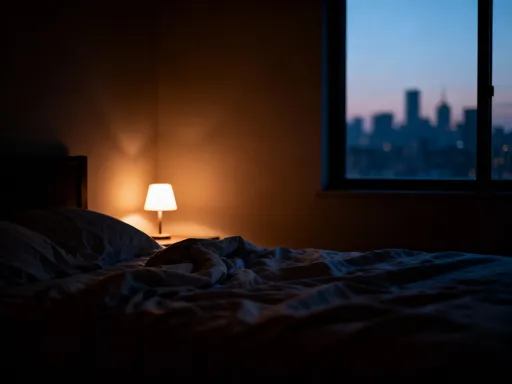
I used to think my bedroom was fine—it had a bed, a lamp, and a dresser. But I didn’t realize how much the environment was working against me. Light, noise, temperature, and even clutter can disrupt sleep by keeping the brain in a state of low-grade alertness. I decided to transform my bedroom into a true sanctuary for rest.
The first change was controlling light. I installed blackout curtains to block streetlights and early morning sun. I also removed any electronic devices with glowing lights, including my digital clock. Complete darkness signals the brain that it’s nighttime, supporting natural melatonin production. Even small amounts of light can interfere with this process, so I made darkness a priority.
Noise was another factor. I live in a busy neighborhood, and nighttime sounds—cars, sirens, neighbors—used to jolt me awake. I started using a white noise machine that played soft rain sounds. The consistent background noise masked sudden disturbances and created a soothing auditory environment. Some nights, I used earplugs for extra quiet. The difference was remarkable—fewer awakenings and a deeper sense of rest.
Temperature played a bigger role than I expected. Research shows that a slightly cool room—around 65°F (18°C)—is ideal for sleep. I adjusted my thermostat and invested in breathable bedding. I also stopped using heavy blankets that made me overheat. Waking up sweaty or too cold used to disrupt my sleep; now, my body stays in a comfortable range all night.
Finally, I decluttered the space. I removed work materials, exercise equipment, and anything that reminded me of stress. My bedroom became a “no-work” zone. I even stopped watching TV in bed. The brain learns through association: when the same space is used for work, stress, and rest, it struggles to switch modes. But when the bedroom is reserved only for sleep and intimacy, the mind begins to expect rest the moment I walk in. This mental cue became one of the most powerful tools in my recovery.
The Long Game: Patience, Progress, and Protecting Your Peace
Healing my sleep wasn’t linear. There were setbacks—nights when stress overwhelmed me, times when old habits crept back in. I learned not to judge these moments as failures, but as part of the process. Recovery isn’t about perfection; it’s about persistence. Every time I returned to my routine, I strengthened my resilience.
I also learned to protect my peace. That meant saying no to late-night commitments, setting boundaries with technology, and prioritizing rest without guilt. I used to believe that being busy was a sign of importance, but I now see that true strength lies in self-care. Taking care of my sleep isn’t selfish—it’s necessary for showing up as the best version of myself for my family, my work, and my well-being.
Over time, the rewards became clear. I had more energy, better focus, and a more stable mood. I laughed more easily, listened more deeply, and felt more present. My relationships improved because I wasn’t operating from a place of exhaustion. I also became more emotionally resilient—better able to handle stress without collapsing under it.
Most importantly, I regained a sense of control. Sleep is no longer something I chase or fear. It’s something I invite, through daily choices that honor my body’s needs. I still use the tools I learned—breathing, journalling, routine—but they no longer feel like chores. They feel like acts of kindness toward myself.
True sleep improvement comes not from chasing exhaustion, but from releasing the grip of stress—one quiet night at a time. This journey taught me that healing isn’t loud or dramatic; it’s found in the soft rhythm of breath, the comfort of routine, and the quiet courage to slow down. You don’t need a miracle. You just need to begin—gently, consistently, and with yourself in mind.